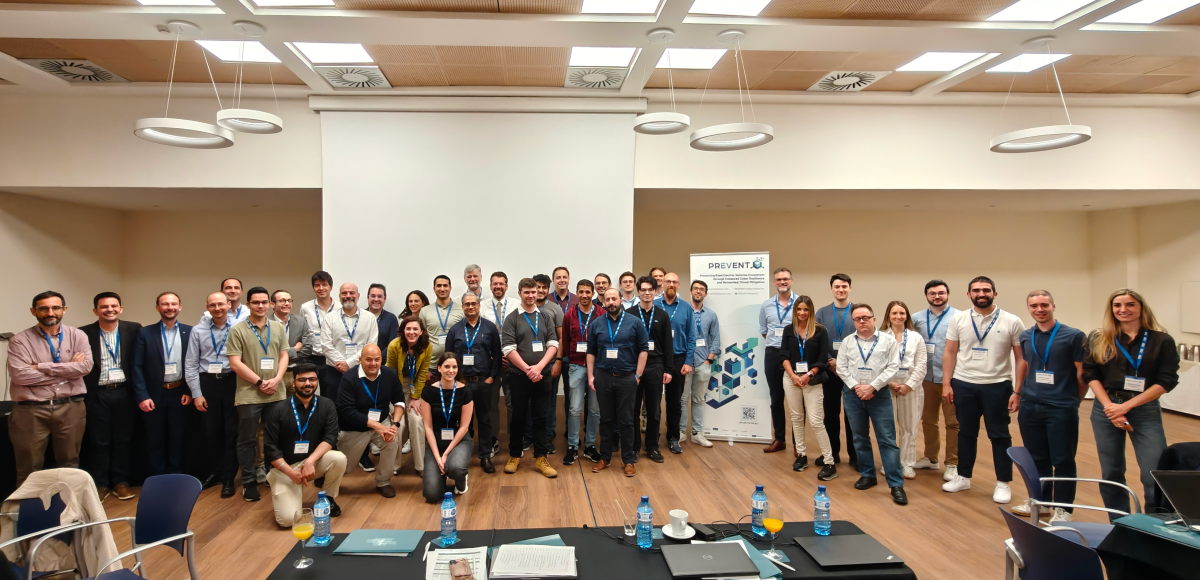

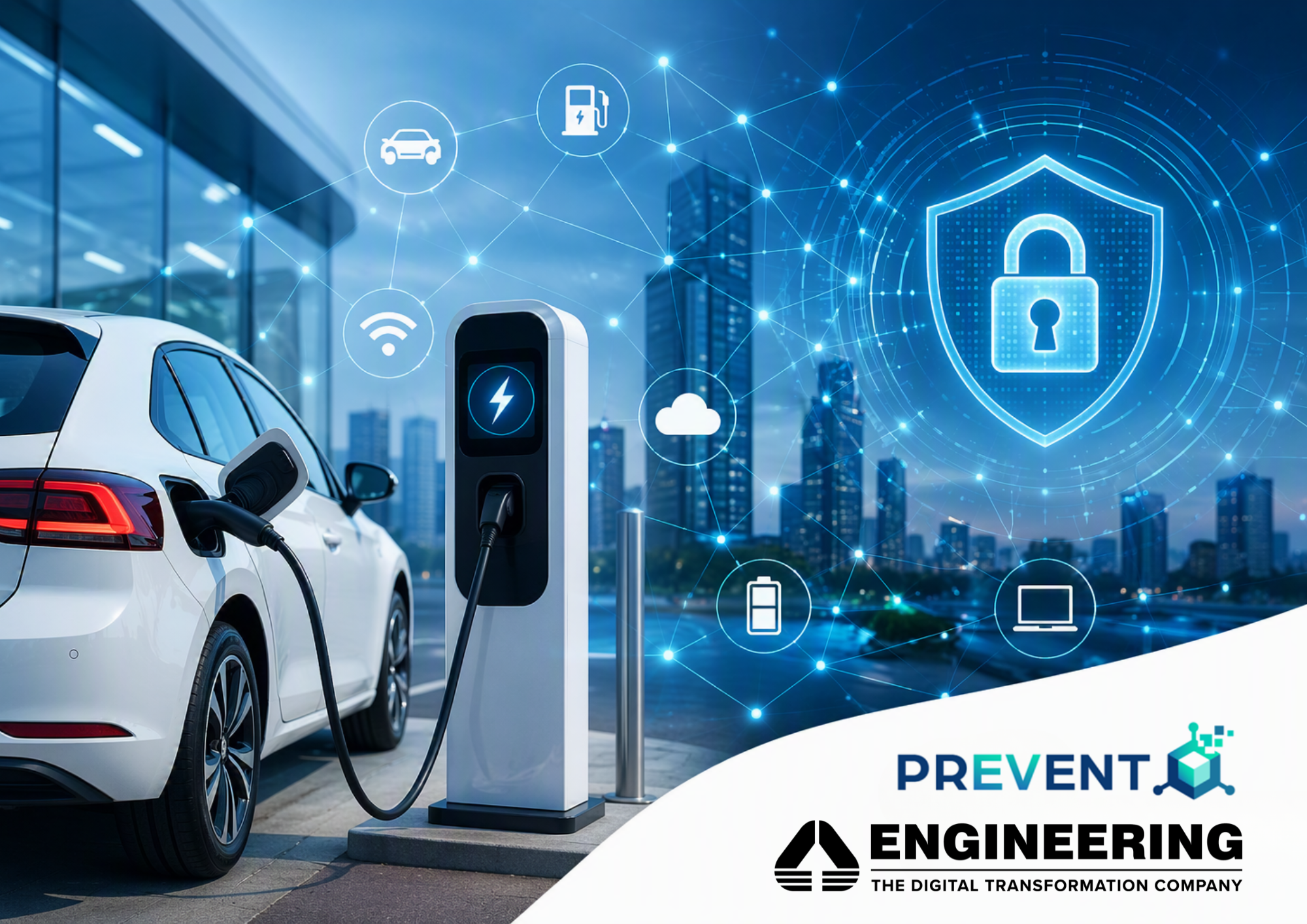
This article provides an overview of Engineering’s role in the PrEVent Project and its contributions to strengthening cybersecurity in the e-mobility ecosystem.
As e-mobility systems become more connected and complex, cybersecurity is essential for their safe and reliable deployment. The PrEVent Project addresses these challenges by developing solutions across the ecosystem. Engineering Ingegneria Informatica S.p.A., a leading Digital Transformation company with more than 40 years of experience and a strong international presence, participates as Technical Coordinator, supporting alignment and consistency across technical activities.
The transition towards electrified and connected mobility is reshaping the way transport systems operate. Vehicles, charging infrastructure, backend platforms, and energy systems are increasingly interconnected, creating new opportunities while also expanding the potential attack surface.
The PrEVent Project addresses this challenge by developing solutions that cover the full cybersecurity lifecycle, from prevention to validation. Within this context, Engineering contributes to both methodological and technical activities, while also ensuring consistency across the different components developed within the project.
Engineering also leads Work Package 2 (WP2), focusing on prevention and preparation measures. These activities aim to strengthen the resilience of e-mobility systems through structured risk assessment, threat modelling, and the definition of practical security guidelines.
Cyber risk assessment and TARA methodology
A key contribution of Engineering within PrEVent is the definition of a Threat Analysis and Risk Assessment (TARA) methodology.
This approach provides a structured way to identify threats, evaluate risks, and define mitigation strategies. It builds on recognised standards such as ISO 21434 and ISO 15118, ensuring alignment with existing best practices [1][2].
An important aspect of this methodology is its adaptability. It is tailored to the specific characteristics of the project pilots, allowing it to reflect real operational conditions rather than remaining purely theoretical.
PreRisk tool
To support risk analysis activities, Engineering will contribute to developing the PreRisk tool.
PreRisk is designed as a modular and interactive solution that supports stakeholders in understanding and managing cybersecurity risks across the e-mobility ecosystem. In particular, it enables:
- identification of relevant assets
- analysis of threats and vulnerabilities
- evaluation of cybersecurity and privacy risks
- prioritisation of mitigation actions
By structuring these steps, the tool helps translate risk analysis into more practical and actionable decision-making processes.
Anomaly detection and monitoring
In addition to preventive approaches, Engineering contributes to detection and monitoring capabilities within the project.
These solutions focus on identifying abnormal behaviours and potential security threats during system operation. By combining intrusion detection mechanisms with data analysis techniques, they support improved visibility of system behaviour and enable earlier identification of potential issues.
System integration and validation
Another important area of work is system integration and validation.
Given the multi-partner nature of the project, ensuring that all components work together as expected is essential. Engineering contributes to integrating the different solutions and supports testing activities carried out in pilot environments.
These validation activities help assess how the developed solutions perform in realistic scenarios and provide valuable feedback for further refinement.
Conclusion
The PrEVent Project contributes to addressing cybersecurity challenges in increasingly connected e-mobility systems by combining methodologies, tools, and validation activities.
In this context, Engineering supports both technical coordination and the development of key components such as the TARA methodology, the PreRisk tool, and monitoring capabilities. By bridging methodological approaches with operational solutions, these contributions help enable more secure, reliable, and scalable e-mobility systems.
Author: Jessica Testa (ENG)
References
[1] ISO/SAE (2021). Road vehicles — Cybersecurity engineering (ISO/SAE 21434:2021). International Organization for Standardization.
[2] ISO/IEC (2019–2022). Road vehicles — Vehicle to grid communication interface (ISO 15118). International Organization for Standardization
Links
https://www.preventproject.info
Keywords
e-mobility, cybersecurity, PrEVent project, TARA methodology, PreRisk, anomaly detection, intrusion detection, system integration, risk assessment, cyber resilience, EV ecosystem