

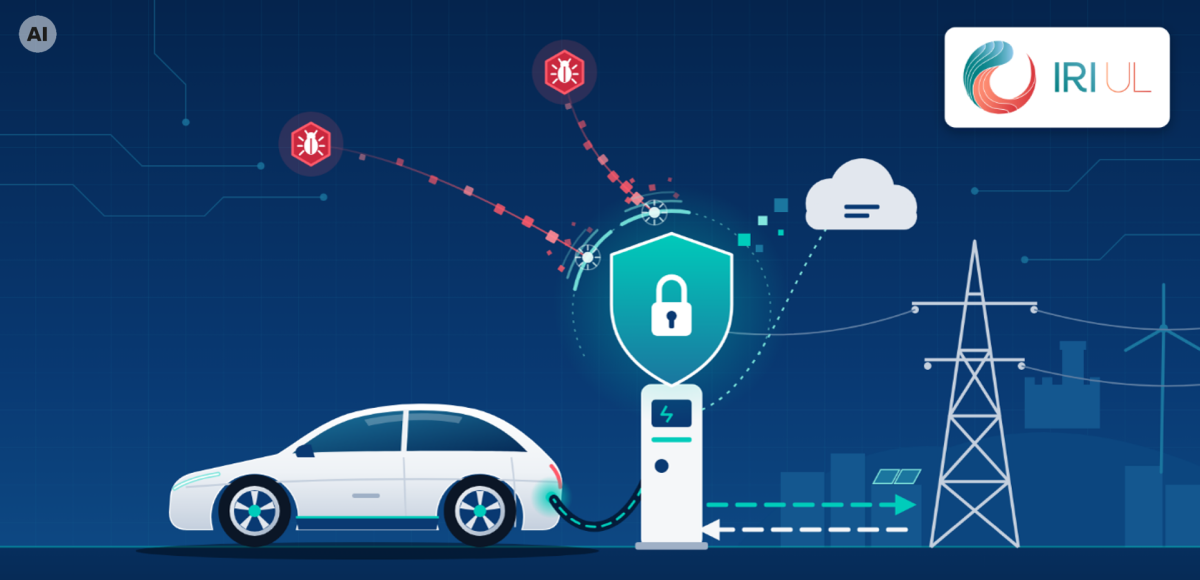
The EU-funded project PREVENT addresses cybersecurity vulnerabilities across different electric vehicle (EV) charging systems. To make sure its solutions hold up under real-world conditions, four pilots in four European countries are opening their facilities, where the PREVENT solutions will be tested and validated later in the project. One of these pilots is located in Ljubljana, Slovenia, and is led by Institute for Innovation and Development of University of Ljubljana (IRI UL).
Together with the local e-mobility service provider (EMSP) AVANT CAR d.o.o. (AVANT) and the local distribution system operator (DSO) Elektro Ljubljana d.d. (ELEK), IRI UL runs three pilot sites (PSs) at different locations in Ljubljana. PS 2 and PS 3 are owned by ELEK, which acts as both DSO and charging point operator, and several PREVENT solutions will be tested on the charging infrastructure already installed there. PS 2 covers EV charging at on-street parking in the Ljubljana city centre, while PS 3 covers charging at the car park in front of a large retail store.
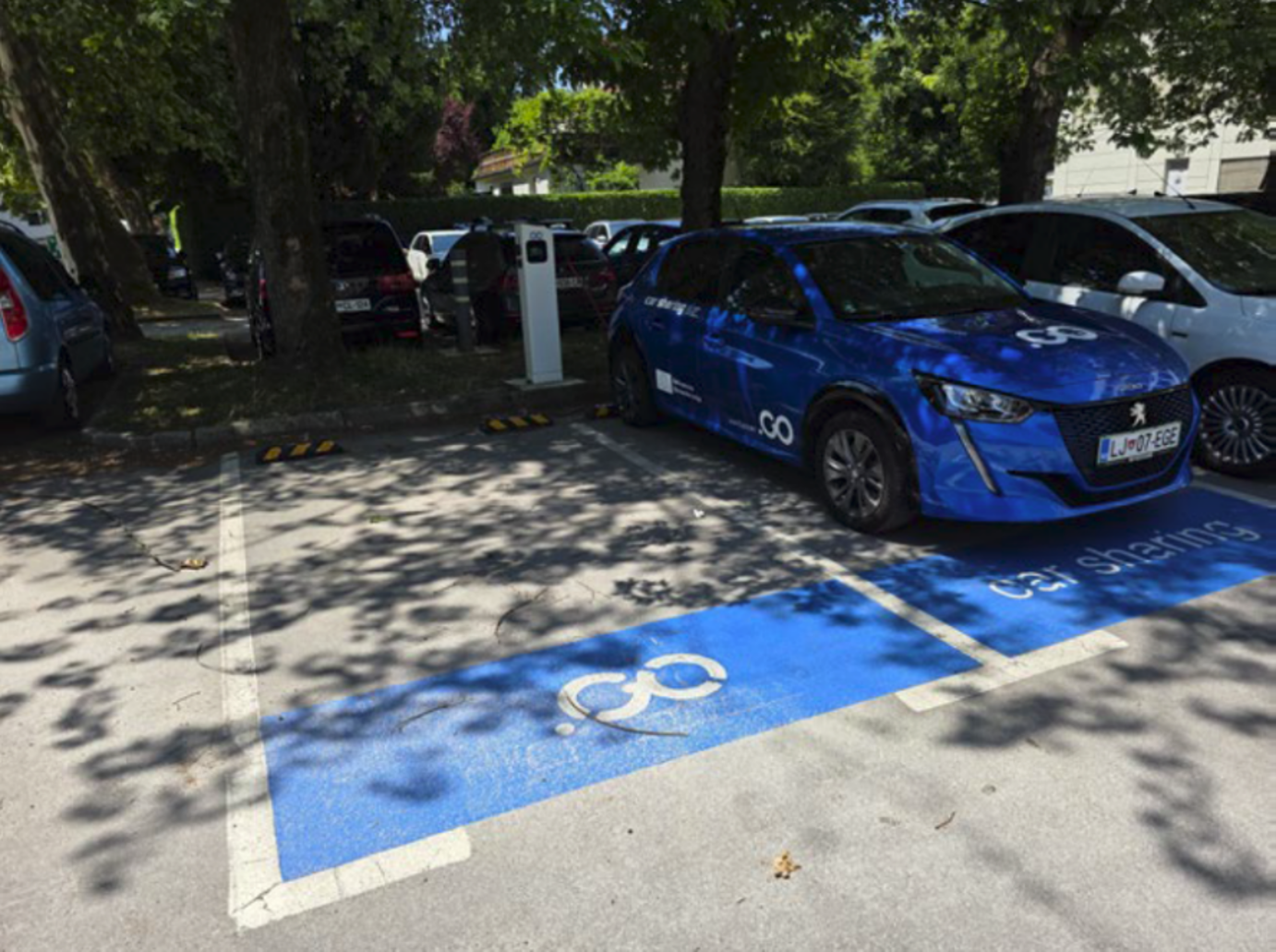
PS 1 is located at the Faculty of Electrical Engineering, University of Ljubljana, where multiple EV chargers already serve AVANT users and faculty employees. Within the project, the plan is to install an additional charger with two sockets next to them. What sets the new charger apart is its Vehicle-to-Grid (V2G) capability. It will allow the consortium to test and validate the PREVENT cybersecurity solutions on V2G software and on two key communication protocols: ISO 15118-20, which covers the link between the EV and the charger, and OCPP 2.x, which connects charger to the charging management backend.
The timing is no coincidence. Under the EU Alternative Fuels Infrastructure Regulation (AFIR), ISO 15118-20 becomes mandatory for newly installed and renovated public charging points from 1 January 2027 [1], so the protocol tested in Ljubljana will soon be part of everyday charging across Europe.
Vehicle-to-Grid
In principle, V2G allows an EV to not only draw electricity from the grid, but also to feed stored electricity back to the grid when needed. This opens the door to services such as grid stabilisation and better integration of renewable energy sources, for example by storing surplus solar or wind power and returning it during peak demand hours. Since a typical car is parked around 95 % of the time (US data) [2], V2G offers considerable opportunities both for EV owners, who could earn additional income, and for system operators, who gain a new source of flexibility.
Research from Slovenia suggests how large this potential could be. A conceptual study by the Faculty of Electrical Engineering, University of Ljubljana, found that solar power, with EV batteries as the only storage, could in theory cover Slovenia’s entire electricity demand [3]. It would need no more solar area than the country has available for photovoltaics and no more vehicles than its 2022 passenger car fleet, although covering all energy use, including heating and fuels, would require additional renewable sources and storage.
A single EV on its own has limited potential to take part in the balancing market. The picture changes for companies such as EMSPs and car-sharing operators that manage hundreds or thousands of vehicles. EVs spread across charging points around the city can be aggregated into a virtual power plant that behaves like a large battery energy storage system with a short response time.
While the technical and economic case for V2G looks promising, its security and cybersecurity require special attention. V2G connects the components and stakeholders of the charging system directly to the electricity grid in both directions, which makes the technology an attractive target for (cyber) attacks. In conventional charging, electricity only flows from the grid to the vehicle. With V2G, a successful attack could actively disturb the grid, with potentially serious consequences for grid stability and for society.
Pilot site at the Faculty of Electrical Engineering
The new charger at PS 1 will be an alternating current (AC) V2G charger. The main challenge with AC V2G today is the availability of compatible vehicles. Most EVs that support open, interoperable V2G do so only with direct current (DC) charging. AC V2G is currently available mainly in closed ecosystems, where the vehicle can charge and discharge only through a dedicated charger. One example is the Renault 5 E-Tech, which offers AC V2G in France together with its own Mobilize wallbox [4].
At PS 1, Use Case 5 (UC 5), titled “V2G control manipulation and coordinated charging attack”, is dedicated to V2G security. Within this use case, the consortium will analyse how to prevent manipulation of the charging control and how to defend against intentional, coordinated attacks on charging and discharging sessions.
Conclusion
V2G could turn parked EVs into a distributed energy resource that supports renewable energy and helps keep the grid stable. The same two-way connection, however, turns every EV, charger and charging management backend into a possible entry point to critical energy infrastructure.
The Ljubljana pilot gives PREVENT a real-world environment to test protection before V2G is rolled out at scale. The goal is for V2G to be not only economically and operationally feasible but also secure by design.
Author: Jernej Jozič, Edin Lakić
Links
- https://eur-lex.europa.eu/eli/reg_del/2025/656/oj
- https://www.energy.gov/cmei/vehicles/articles/fotw-1356-august-19-2024-household-vehicles-were-parked-95-typical-day-2022
- https://www.mdpi.com/1996-1073/17/11/2733
- https://www.mobilityhouse.com/int_en/our-company/newsroom/article/charge-for-free-renault-group-mobilize-and-the-mobility-house-launch-vehicle-to-grid-in-france-while-germany-is-establishing-the-regulatory-framework
Keywords
Vehicle-to-Grid (V2G), cybersecurity, EV bidirectional charging, Ljubljana pilot, PREVENT project